
What GCC project delivery experience can bring to the Far East
The Far East is home to some of the most capable development markets in the world. They are well served by established cost consultancies, sophisticated in their delivery, and under no illusions about what it takes to build. So this is not a piece about what these markets need to learn.
It is a piece about a pressure they increasingly share and a discipline that travels well in response to it.
Across the region, ambition, programme and cost are pulling in different directions. Construction inflation, demanding sustainability standards, a wave of hospitality and refurbishment investment, compressed decision-making and evolving scope are all testing how well projects hold to their budgets. That tension is not unique to the Far East. We have spent the last decade managing cost and commercial risk in the GCC, where it is a constant - projects delivered at pace, under intense cost pressure, with ambitious clients and shifting requirements. It has not made us better than the markets we are about to visit. It has given us a particular discipline, and it is one worth comparing notes on.
The assumption worth challenging
The most common assumption we push back on is that a budget is simply a fixed number the architect must design to, while still delivering every client aspiration. In reality, that only works if the budget was realistic to begin with and is actively managed as the design develops.
The real money on any project is saved at the beginning, not at the end. It is saved by setting the right budget
Challenging assumptions early, aligning aspiration with affordability, and managing the design against that budget throughout. Once the design has moved too far ahead of commercial reality, the cost of correcting it in money, programme and design intent becomes far greater. This holds true whether the project is a villa, a tower, a masterplan or a giga-project. The scale changes; the principle does not.
What that looks like in practice
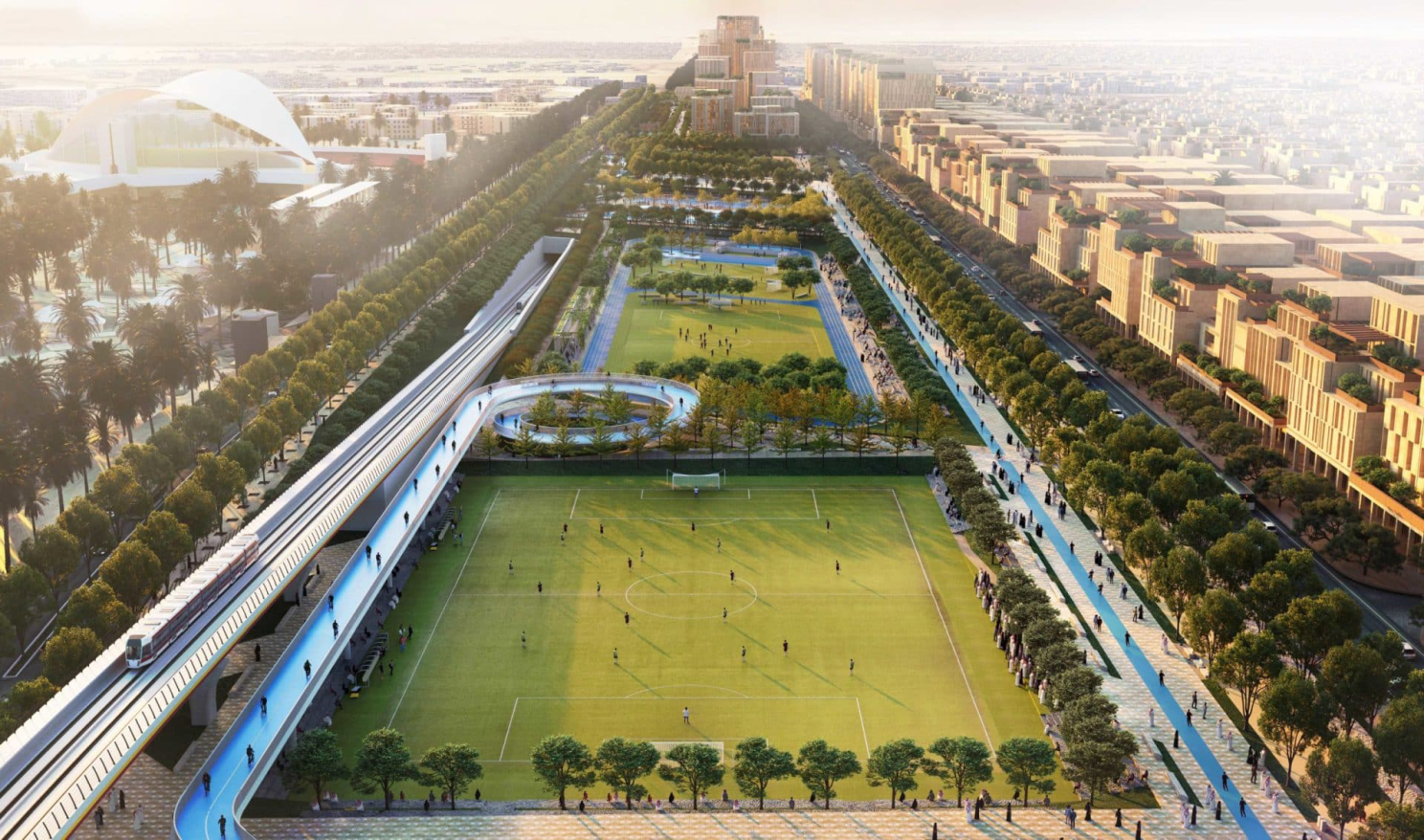
What that looks like in practice on a major Riyadh masterplan, a pre-concept estimate of SAR 7.6 billion had established the project budget. By the close of concept design, the client’s cost consultant had priced the scheme at SAR 11.4 billion nearly SAR 4 billion over budget. The client’s response was the one most clients are forced into: instruct a redesign, at the consultant’s cost, with considerable delay.
We were asked to carry out an independent commercial review a full estimate, a gap analysis, and an explanation of the variance. Our substantiated review established a construction cost of SAR 8.9 billion, supported by a detailed interrogation of the rates and assumptions behind both earlier estimates and the design development that had driven the increase. The client and their own cost consultant reviewed our findings and accepted them. Our estimate was adopted as the revised project budget. No redesign was required.
Speed does not have to cost certainty
The risk on accelerated projects is that the programme moves faster than the cost information. Decisions are pushed through, designers keep progressing, and the project advances into the next stage before cost certainty has been established. It looks like time saved. More often it is time borrowed repaid later, at a premium, in the form of value engineering, redesign, procurement pressure, contractor claims and lost design intent.
Cost certainty does not slow a project down when it is managed properly. It gives the team a clearer framework for making faster, better decisions. The earlier the budget is tested and aligned with the design, the less time is lost later correcting choices that should have been resolved at the right stage.
What actually transfers to the Far East
The useful transfer from Riyadh and the UAE is not GCC experience in isolation. It is the process and discipline applied from the earliest stages of a project looking beyond the headline budget to design intent, scope, procurement, buildability, risk, programme, authority requirements and the cost consequences of the decisions being made.
A large part of that is structured commercial challenge. We understand construction, and we are not there simply to agree with the client or the design team. We are there to test assumptions, raise concerns early, and identify where a decision affects cost, viability or deliverability. We track change between design stages what has changed, why, and whether it moves the cost up or down so the client and design team always have a clear commercial record of how the project is developing.
For a developer, contractor or design team across the Far East, that is the offer: senior, early-stage commercial perspective that brings design-to-budget discipline and practical construction understanding into the design process before cost problems become claims, redesigns or stalled projects. Not in place of strong local cost consultancy, but alongside it.
Through our wider project experience, Carter Hones Associates has worked alongside internationally recognised practices with a strong presence across the Far East. These relationships have given us a strong appreciation of the ambition and design standards shaping the region’s built environment.
Our own commercial approach was shaped by one of the most demanding construction environments in the world. Delivering to budget across the GCC at pace, at scale, and under genuine commercial pressure has given us a discipline we believe travels.
.jpg)